
DentalMonitoring
DentalMonitoringMedical
4.7881.00 Reviews
- Version
- Varies With Device
- Installs
- 500.00K
- Age Rating
- Everyone
Screenshots
Our Review of DentalMonitoring
 Analysis by Appyee
Keeping orthodontic treatment moving usually means more than wearing aligners or attending appointments. Someone also needs to check whether the treatment is progressing as expected, and that is the specific problem DentalMonitoring is built around. It is a medical app from DentalMonitoring that supports remote orthodontic follow-up, giving patients a way to stay connected with their orthodontic care between visits.
I see its main value in reducing the gap between appointments. Instead of treating every scheduled visit as the only moment when progress can be discussed, the app makes ongoing communication part of the routine. That can be especially useful when life is busy, travel is involved, or a small concern appears before the next planned consultation.
The app is free to install and is rated for Everyone, which makes the basic entry point approachable for families and adult patients alike. It has been available since April 10, 2015, and its presence on the app market is reflected in more than 500 thousand installs. A 4.7 average from around 10 thousand ratings also suggests that many users find the remote-follow-up idea worthwhile, although an app like this should still be judged by how well it fits a person’s orthodontic arrangement rather than by popularity alone.
Remote orthodontic follow-up is the real reason to use it
I find the app most useful when I think of it as one part of an orthodontist-led routine, rather than a shortcut around appointments. That distinction helps set sensible expectations: the patient contributes regular follow-up, while the care team remains responsible for interpreting it. It also makes the next practical question clear—how much does a dependable connection matter when completing that routine?
What the central capability changes
The strongest part of DentalMonitoring is not that it replaces an orthodontist. It does something more practical: it helps the orthodontic team review a patient’s situation without requiring every check to happen in person. That distinction matters. The app is best understood as a bridge between professional appointments, not as an independent treatment planner or a general dental advice tool.
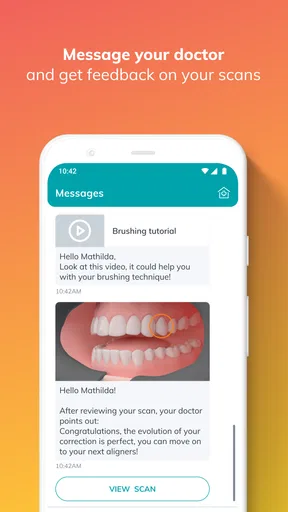
In ordinary orthodontic care, a patient may notice a loose attachment, an aligner that no longer feels right, or a change that causes concern. Without remote follow-up, the choices can be inconvenient: wait and hope the issue is harmless, contact the clinic manually, or arrange an extra visit. A structured monitoring process can make the next step clearer because the care team receives information through the channel intended for treatment follow-up.
For me, this changes the rhythm of treatment. The patient is not simply waiting for the calendar to reach the next appointment. There is a continuing check-in habit, and that can make treatment feel more supervised. It may also help a clinic identify when a patient needs attention sooner, though the app should never be treated as an emergency service or as a substitute for direct professional care when something is urgent.
How the patient experience fits into treatment
The useful mental model is a repeating cycle: the orthodontic team asks for a follow-up, the patient provides the requested information through the app, and the team reviews it as part of ongoing care. The exact instructions depend on the patient’s provider and treatment plan, so the app’s usefulness is tied closely to whether the orthodontic practice actively uses it.
That provider connection is one of the first practical questions a new user should settle. Installing the application alone does not turn it into a personal orthodontic consultation. If your orthodontist has not enrolled you or explained how your follow-up is handled, the app may offer little immediate value. I would contact the practice first rather than assuming that downloading it is enough.
This is also why DentalMonitoring feels different from a standard dental information app. A general dental app may offer reminders, educational material, or ways to organize appointments. This one is centered on the relationship between a patient’s treatment and the orthodontic team’s review. Its value comes from that clinical workflow, not from being a broad library of oral-health content.
A realistic week with the app
Imagine a student using aligners while preparing for exams. Her next clinic visit is not convenient, but she notices that one tray feels unusually tight and is unsure whether that is normal. Rather than searching random advice online, she can follow the monitoring process established by her orthodontic provider and send the requested follow-up information. The team can then decide whether the situation simply needs continued observation or deserves a direct response.
The important benefit is not guaranteed instant reassurance. The benefit is that the concern enters the same treatment channel as the rest of her orthodontic follow-up. That can prevent a minor question from becoming a source of unnecessary anxiety, while also making it easier for the clinic to notice when a patient’s progress needs closer attention.
For a parent, the same workflow can reduce the need to remember every detail of a child’s treatment between visits. For an adult balancing work and appointments, it can make routine supervision less disruptive. In both cases, the app works best when the user treats follow-up as a small recurring responsibility rather than something to open only when a problem appears.
Small habits that make remote monitoring more useful
One non-obvious lesson is that consistency matters more than speed. A rushed submission can create avoidable uncertainty, while a calm routine makes the information easier for the care team to interpret. I would choose a regular time when the patient is not distracted, follow the provider’s instructions carefully, and avoid treating the process like a quick photo task that can be completed carelessly.
Another useful habit is to keep the app connected to the patient’s own treatment notes. If something feels different, write down when it started and what changed in the routine before completing the follow-up. That context can help the patient describe the situation clearly if the orthodontic team asks for more information. It also prevents the common mistake of relying on memory several days later.
A third insight is that remote monitoring can support better appointment preparation. If the app prompts a patient to pay closer attention to progress between visits, the patient may arrive with more focused questions instead of a vague feeling that something has changed. I would keep a short list of concerns and bring it to the next in-person appointment, because remote follow-up and face-to-face care work better together than either one used in isolation.
Where the convenience has limits
The same feature that makes the app convenient can also create friction. Remote follow-up depends on the patient completing the requested steps properly and on the orthodontic team reviewing the submission within its own clinical workflow. It is not a live chat promise, and I would not use it when an urgent medical decision is needed immediately.
It can also feel like extra homework during treatment. A patient who already struggles to remember aligner changes, cleaning routines, or appointment dates may see another recurring task as a burden. The app does not remove the need for personal responsibility; in some ways, it makes that responsibility more visible. If you know you will ignore repeated follow-up requests, the system may not deliver its intended benefit.
There is also a human limitation. A remote check can provide useful treatment information, but it cannot reproduce every part of an in-person examination. A clinician may need to assess discomfort, fit, attachments, bite changes, or other details directly. I would therefore regard the app as a way to improve continuity, not as a reason to cancel professional appointments or postpone a concern that requires physical assessment.
Who benefits most from this approach
DentalMonitoring makes the most sense for patients whose orthodontic provider has incorporated remote monitoring into their care. It is particularly appealing when regular travel to the clinic is difficult, when work or school makes appointments disruptive, or when a patient wants a clearer sense of what happens between scheduled visits.
It can also suit people who respond well to structured routines. If you prefer having a defined follow-up process instead of deciding on your own whether a change is worth contacting the clinic about, the app may make treatment feel more organized. Parents may appreciate the additional structure when helping younger patients stay engaged, while adults may value fewer unnecessary trips when the care team can handle a routine check remotely.
On the other hand, I would be cautious about choosing it as a main reason to switch orthodontic providers. The quality of the experience depends heavily on the clinic’s instructions, responsiveness, and treatment process. A polished app cannot compensate for unclear communication or a care plan that does not suit the patient. The provider remains more important than the software.
Someone looking only for brushing reminders, general dental education, or a simple appointment calendar should probably choose a more general oral-health app. DentalMonitoring is narrower and more clinically connected. That narrow focus is its strength for active orthodontic patients, but it is unnecessary for someone who is not receiving monitored orthodontic treatment.
How it compares with traditional follow-up
The usual alternative is straightforward: attend appointments at the clinic and contact the practice by phone or message when something happens in between. That approach remains valuable because in-person visits allow direct examination and conversation. For complicated concerns, it is still the better option.
DentalMonitoring adds a middle layer rather than replacing that traditional model. Routine progress can be shared through the app, while appointments can focus on decisions and hands-on care that cannot be handled remotely. In the best scenario, this means fewer unnecessary disruptions without turning treatment into an entirely digital experience.
Compared with informal messaging, a dedicated orthodontic follow-up app can feel more organized because the patient is working within a process designed for treatment monitoring. The trade-off is flexibility: a casual message may feel faster for a one-off question, while the app is more useful when the provider has established a regular workflow around it.
Practical questions to settle before relying on it
The first question is whether your orthodontist actually supports DentalMonitoring. Ask how often you are expected to complete follow-ups, what kinds of concerns should be reported through the app, and what situations require a phone call or an in-person visit. Those answers determine whether the app will be a central part of your treatment or merely an optional download.
The second question is what to do if you miss a follow-up. I would not guess or submit rushed information simply to catch up. Contact the practice and ask how they want the missed step handled. A clear clinic-specific instruction is more useful than a general assumption about the schedule.
The third question concerns response expectations. Before depending on remote monitoring, find out how the practice communicates after a submission and how urgent issues are handled. This avoids confusing routine review with immediate support and helps the patient choose the correct channel when discomfort or damage needs prompt attention.
The fourth question is whether the routine fits your household. If a child needs help completing the process, or if your work schedule makes regular follow-up difficult, decide in advance who will handle it and when. A simple shared routine can make the difference between an effective monitoring tool and an ignored notification.
My final view after focusing on the everyday workflow
I like DentalMonitoring because it addresses a real weakness in orthodontic care: the long stretch between appointments when patients may be unsure whether everything is progressing normally. Its remote follow-up approach can make treatment feel more continuous, especially for people who live busy lives or find repeated clinic visits difficult.
My recommendation comes with an important condition: use it as part of an orthodontist-led plan. It is not a replacement for examination, emergency care, or personal attention to symptoms. It also asks the patient to be consistent, accurate, and willing to follow the practice’s routine.
As a free medical app from DentalMonitoring with an Everyone age rating, it is easy to consider when a provider offers it as part of orthodontic treatment. The strong 4.7 average and broad adoption make it worth taking seriously, but the deciding factor is more personal: does your orthodontic team use remote follow-up in a clear, responsive way? If the answer is yes, this app can turn the space between appointments into a more manageable part of treatment. If the answer is no, a direct conversation with the clinic remains the better first step.
For the right patient, its greatest strength is not flashy technology. It is the simple possibility of sharing treatment progress before a small question becomes a larger interruption. That is a focused benefit, and when the clinic and patient both commit to the process, it can make orthodontic care feel more connected from week to week.
Verdict
Strengths of DentalMonitoring
- Remote check-ins reduce the need for frequent in-office visits.
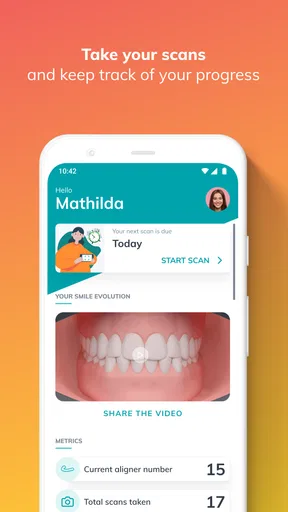
- AI-assisted scans can help identify changes between appointments.
- Works with orthodontic treatment plans from participating providers.
- Photo guidance helps users capture more consistent mouth images.
- Progress tracking makes treatment milestones easier to follow.
Limitations of DentalMonitoring
- Requires a compatible smartphone with a reliable camera and internet access.
- Some features are available only through participating dental practices.
- Scan quality can suffer from poor lighting or incorrect positioning.
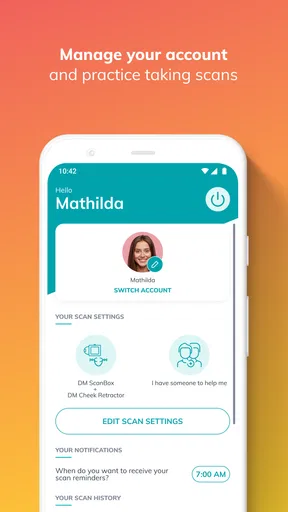
- Users may need to purchase or use a specific scanning accessory.
- It does not replace professional examinations or urgent dental care.
Similar Picks in This Category
View All
WebMD: Symptom Checker
WebMD, LLC4.1

Microphone Amplifier
DOSA Apps4.2

Anatomy Learning - 3D Anatomy
3D Medical OU4.5

Period Tracker and Calendar
SimpleInnovation4.9

GoodRx: Prescription Coupons
GoodRx4.8

CVS Health
CVS Pharmacy4.5
Frequently Asked Questions
What is DentalMonitoring, and who is it designed for?
DentalMonitoring is a remote orthodontic and dental-care platform that allows patients to share regular photos or scans of their teeth with their dental provider through a mobile app. It is mainly intended for patients whose clinic uses the service, including people with braces, clear aligners, retainers, or other monitored treatments. The app does not replace professional appointments; instead, it helps the care team follow progress between visits.
How does DentalMonitoring work during orthodontic treatment?
After your dental provider enrolls you, the app guides you through taking standardized images of your teeth, usually with a smartphone and an approved scanning accessory or imaging method. The images are uploaded for review by your orthodontic team, who may provide instructions, confirm progress, or contact you if something needs attention. Your provider determines the scanning schedule and remains responsible for treatment decisions.
Do I need special equipment or a compatible smartphone to use DentalMonitoring?
DentalMonitoring generally requires a supported Android or iOS smartphone with a working camera, internet access, and the account details supplied by your dental practice. Depending on the treatment and the provider’s setup, you may also need a DentalMonitoring scan box, cheek retractors, or another approved accessory to capture clear images. Compatibility, supported devices, and equipment requirements can vary, so check with your clinic before downloading.
Can DentalMonitoring replace visits to my dentist or orthodontist?
No. DentalMonitoring is designed to complement in-person dental and orthodontic care, not replace it. Remote scans can help the clinical team observe treatment progress, identify certain issues earlier, and decide whether an appointment or adjustment may be appropriate. However, the app cannot perform a complete examination, take every necessary diagnostic image, or handle emergencies. Always follow the appointment schedule and contact your provider directly when you have concerns.
Is DentalMonitoring safe, private, and free for patients?
The app is intended to transmit treatment-related photos and information securely to your dental provider, but users should review the current privacy policy, permissions, and data practices before use. DentalMonitoring access is commonly arranged through a participating clinic rather than purchased independently, and any patient cost depends on the provider and treatment plan. Downloading the app may be free, but accessories, monitoring services, or treatment fees can vary.
